Skill
Slop Check
A diagnostic that finds AI slop — hollow, templated prose that looks finished but says little. It reports; you rewrite.
Slop is writing with superficial competence and nothing under it — fluent, polished, hollow. The tell is a gap: the text looks more finished than it is informative, and it costs the reader more than it returns.
This skill diagnoses that gap. It does not fix it. It reports what is wrong and where; you do the rewriting. The split is deliberate — you keep your own voice, and a problem you fix yourself is a problem you stop making.
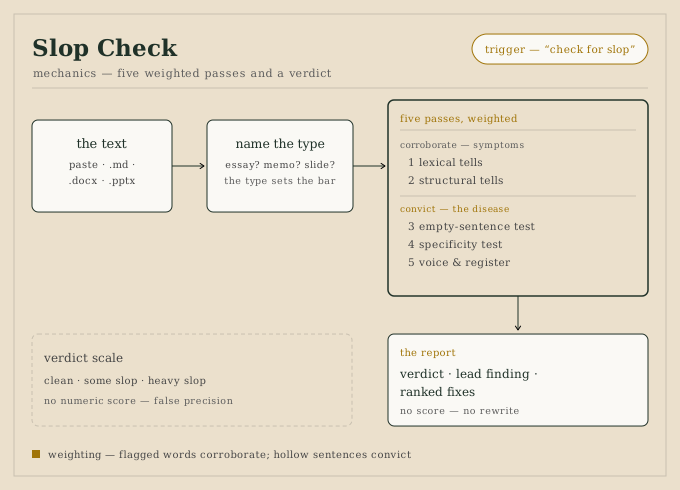
How it works
It runs five passes over a piece, weighted so hollowness counts for more than surface tells.
- The empty-sentence test. Delete each sentence. If the reader loses nothing — no fact, no claim, no turn in the argument — the sentence is slop.
- The specificity test. Find the claims, then check whether each is anchored to a number, a name, a date, a mechanism, or whether it floats. “Drives meaningful efficiency gains” floats. “Cut the close from nine days to four” lands.
- Voice and register. Did a specific person with a point of view write this, or was it assembled to offend no one? Slop can never be wrong, because it never commits to anything.
- Lexical and structural tells. The AI-tells catalogue — flagged words by tier, plus the shapes of machine writing: the compulsive rule-of-three, the “not just X, but Y” flip, the hedging seesaw, uniform paragraphs. These corroborate; they do not convict.
The output is a verdict — clean, some slop, or heavy slop — then the single worst thing in the piece, then a ranked list of what to fix, each with a direction rather than a rewrite. No numeric score; a “62/100” is false precision dressed as rigour.
Use it on
Memos, essays, emails, reports, slide copy. Name the artifact type first: bullet fragments are slop in an essay and correct on a slide.